_画板-1@2x.png)

A New Option in Domestic High-End Memory
STT‑MRAM: High Speed, High Reliability, Long Endurance
Shanghai Siproin Microelectronics Co., Ltd. has introduced its STT‑MRAM series of chips, offering high-speed read/write, non-volatility and high endurance. Designed for critical fields such as industrial control, communications, IoT and aerospace, they help advance the domestic replacement of high-end memory and drive intelligent upgrades.
Built for High-Reliability, High-Speed Storage
The MRAM series is Siproin Microelectronics’ SPI-interface non-volatile STT‑MRAM chip family for industrial control, communications equipment, IoT and aerospace. Positioned as a replacement for conventional memory devices such as Flash, EEPROM and FRAM, it addresses industry pain points including frequent read/write cycles, power-loss data protection, low-power operation and wide-temperature stability.
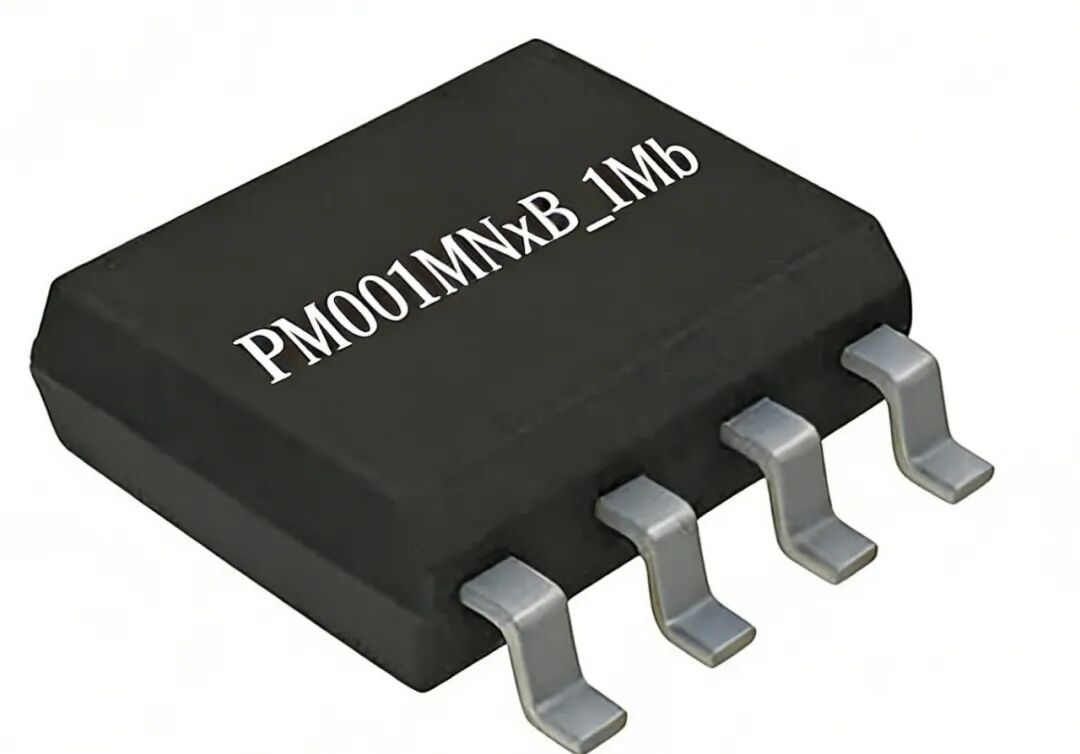
Rather than storing data as electric charge, it records information using magnetic tunnel junctions (MTJ) and electron spin orientation. This gives it inherent non-volatility, high-speed read/write, zero write delay, high endurance and long data retention, making it a perfect fit for critical systems with extreme demands on data security and response speed.
The MRAM series comprises five chips: PN256KNIA, PM256KNIA, PM001MNxB, PM002MNxB and PM004MNxB.
Hard-Core Capabilities at a Glance
1. Clear, Easy-to-Use Basic Specifications (1) Storage Capacity and Interface
| Modell | Kapazität | Schnittstelle |
| PM001MNxB | 1Mb | Compatible with SPI-interface FRAM and Flash |
| PM002MNxB | 2Mb | Supports standard SPI (Mode 0/3) and QPI mode |
| PM004MNxB | 4Mb | Supports standard SPI (Mode 0/3) and QPI mode |
| PN256KNIA | 256Kb | IIC (supports multi-device addressing, up to 4 chips on the bus) |
| PM256KNIA | 256Kb | SPI (supports Mode 0 and Mode 3) |

(2) Memory technology: STT‑MRAM (Spin-Transfer Torque Magnetic Random-Access Memory)
(3) Data retention: more than 10 years of retention without power, with no capacitor or battery backup required
(4) Operating characteristics: zero write delay, random-address read/write, and direct writes with no erase cycle required
2. Four Core Technical Advantages
(1) Truly non-volatile, with zero data loss on power-down. Unlike SRAM, which loses its data the moment power is cut, this device stores information in magnetic states, so data is reliably retained for more than 10 years after power-down. It is particularly well suited to storing data that must never be lost, such as system configuration, logs, fault codes and calibration parameters.
(2) High-speed read/write plus zero write delay for faster system response. Conventional Flash/EEPROM must be erased before every write, which introduces millisecond-level latency. This MRAM reads and writes at the same speed, supports random access and requires no wait cycles, enabling high-frequency real-time data logging and greatly improving system real-time performance.
(3) High endurance, supporting virtually unlimited read/write cycles. Compared with the limited erase/write lifespan of Flash, the STT‑MRAM structure suffers almost no physical wear and withstands an extremely high number of read/write cycles, delivering a “never needs replacing” service life in applications such as industrial data acquisition and high-frequency log storage.
(4) Low power consumption plus wide-temperature reliability for harsh environments. The chip has low overall power consumption and supports long-term operation of battery-powered devices. It also offers excellent noise immunity and wide-temperature operation, maintaining stable read/write performance at temperature extremes and under strong electromagnetic interference to meet the requirements of industrial and outdoor applications.
Four Key Application Areas:
Covering Every Essential High-Reliability Scenario
1. Industrial Control and Automation. In PLCs, servo drives, sensor data loggers, industrial gateways and motion controllers, equipment must frequently record operating parameters, fault information and acquired data, and must guarantee that nothing is lost when power is cut.
With its zero write delay, high endurance and non-volatility, Siproin’s MARM series can replace conventional EEPROM/Flash to improve system stability and service life while reducing maintenance costs.
2. Communications Equipment. Routers, switches, 5G small cells and optical modules must store configuration information, traffic logs and firmware parameters at high speed, while ensuring that configurations survive power loss, that the system boots quickly and that it remains stable over the long term. The SPI interface makes integration easy, high-speed read/write guarantees system responsiveness, and 10-year data retention makes communications infrastructure more reliable.
3. Internet of Things (IoT) Devices. Smart sensors, wearables, wireless terminals and metering products are mostly battery-powered, with little space, strict low-power requirements and a need to store small amounts of critical data reliably over the long term. The chip’s low power consumption, non-volatility, small footprint and long service life make IoT endpoints more energy-efficient, more durable and more reliable.
4. Aerospace and Defense. Navigation systems, communications terminals and airborne equipment place extreme demands on data security, stability, radiation tolerance and operation in harsh environments that conventional memory struggles to satisfy. With its stable structure, strong noise immunity and long data retention, STT‑MRAM is an ideal memory choice for high-reliability applications.
Compared with Conventional Memory:
Where Does MRAM Excel?
| Merkmal | Flash/EEPROM | SRAM | PM001MNxB PM002MNxB PM004MNxB PN256KNIA PM256KNIA |
| Non-volatility | Ja | Nein | Ja |
| Write delay | Yes (erase required) | Nein | Nein |
| Read/write speed | Relatively slow | Fast | Fast (close to SRAM) |
| Erase/write endurance | Limited | Hoch | Extremely high (virtually unlimited) |
| Stromverbrauch | Relatively high | High (refresh required) | Niedrig |
| Typical applications | Code / high-capacity storage | High-speed cache | High-speed, long-term storage of critical data |
In Short:
MRAM = the speed of SRAM + the non-volatility of Flash + lower power consumption + longer life.
Focused on High-End Non-Volatile Memory,
Enabling Domestic Replacement
Shanghai Siproin Microelectronics Co., Ltd. has deep expertise in MRAM and high-performance non-volatile memory, and is committed to independent R&D and technological innovation. Focused on high-reliability markets such as industrial, communications, automotive, IoT and aerospace, the company provides customers with stable, high-performance memory chips and solutions that can be mass-produced at scale.
As the company’s flagship STT‑MRAM product, MRAM stands out for its mature process, stable performance, standard SPI interface, long data retention and high-speed read/write. It has become the preferred part for domestic replacement, helping customers break free from reliance on foreign suppliers and improve supply chain security and product competitiveness.
For Critical Data Storage,
Choosing the Right MRAM Matters
Today, as high reliability, low latency, long service life and power-loss protection become ever more important, conventional memory can no longer meet the needs of high-end equipment. With their 1M Bit, 2M Bit, 4M Bit, 256K Bit and 256K Bit capacities, SPI/IIC interfaces, STT‑MRAM architecture, more than 10 years of data retention, zero write delay, high endurance and low power consumption, the PM001/PM002/PM004/PN256KNIA/PM256KNIA of Siproin Microelectronics’ MRAM series precisely cover the four major application areas of industrial control, communications, IoT and aerospace, giving systems next-generation memory support that “stores fast, never loses power, lasts long and stays stable.”
In the future, as smart devices, the industrial internet and critical infrastructure continue to evolve, STT‑MRAM will become a mainstream high-reliability memory solution. Shanghai Siproin Microelectronics will keep advancing its technology and launch MRAM products with more capacities and more interface options, empowering the digital and intelligent upgrade of industries across the board with domestically developed high-end memory.

