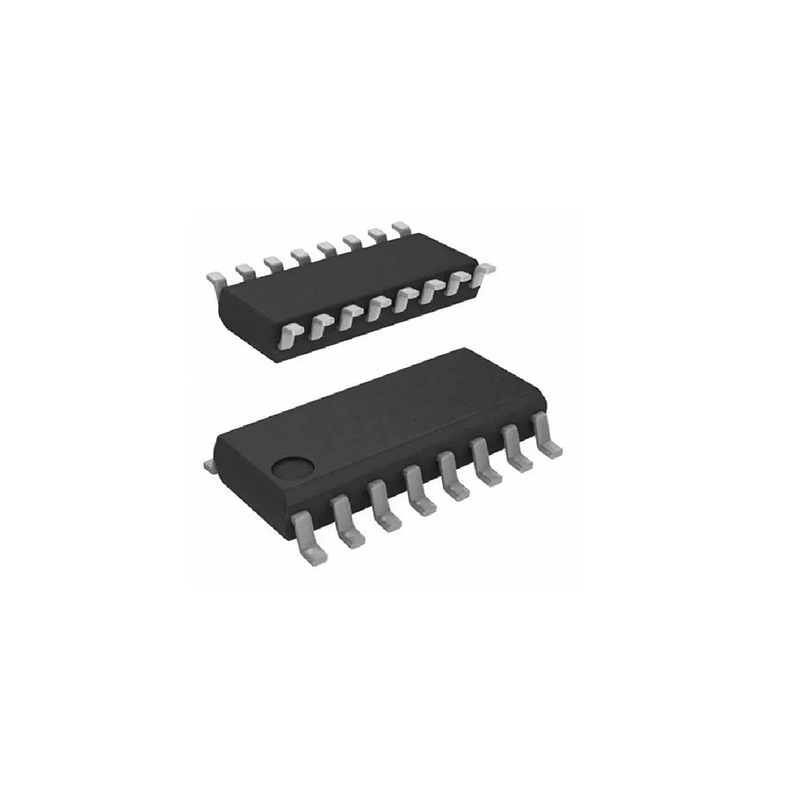
Global Semiconductor Sales Surge to $88.8 Billion in February. The Semiconductor Industry Association (SIA) announced global semiconductor sales reached $88.8 billion in February 2026, a 7.6% increase from January 2026 ($82.5 billion) and a 61.8% increase from February 2025 ($54.9 billion). “Global chip sales remained very strong in February, exceeding January’s totals and far outpacing sales from February of last year,” said John Neuffer, SIA president and CEO. Regionally, year-on-year sales in February were up in Asia Pacific/All Other (93.5%), the Americas (59.2%), China (57.4%), and Europe (42.3%), but declined in Japan (-0.3%).
TSMC 2nm Capacity Fully Booked for 2026
TSMC’s 2nm production capacity was reportedly fully booked in February by orders from global tech giants, driving its stock price up 2.5%. AMD plans to begin production of 2nm-based CPUs in 2026, while Google and AWS are reportedly planning to adopt the 2nm process in Q3 and Q4 2027, respectively. NVIDIA is planning to launch its “Feynman AI” GPU in 2028, expected to adopt TSMC’s A16 process with backside power delivery.SK Hynix Warns of Memory Shortage: Inventory Down to 4 Weeks
SK Hynix disclosed that its DRAM and NAND inventory had fallen to approximately four weeks, with no customer able to fully meet their needs, as revealed at a virtual investor conference. With 2026 HBM capacity already sold out, the extreme shortage of standard DRAM is significantly boosting supplier bargaining power. The memory market is fully entering a “seller’s market,” with memory shortage trends expected to persist into 2027.ASML Confirms Next-Generation High-NA EUV Tools Ready for Mass Production
ASML announced that its next-generation chip manufacturing tools (High-NA EUV) are ready for mass production, marking a major milestone for the semiconductor industry. ASML CTO Marco Pieters stated that the company’s data shows High-NA EUV downtime has been significantly reduced, 500,000 wafers have been produced, and the tools can draw sufficiently precise chip circuit patterns. However, the new tools cost approximately $400 million each, double the cost of the previous EUV machines. ASML also plans to increase EUV light source power from 600W to 1000W, which is expected to boost wafer production capacity by about 50%.NVIDIA Developing New AI Inference Chip for OpenAI and Others
NVIDIA is developing a new processor specifically designed for AI inference computing to help OpenAI and other customers build faster and more efficient tools, as reported by The Wall Street Journal on February 27. The new system is expected to be officially unveiled at NVIDIA’s GTC developer conference in March and will utilize chips designed by startup Groq. OpenAI is expected to become one of the largest customers for NVIDIA’s new processor.Meta Signs $60 Billion AI Chip Deal with AMD. On February 24, Meta and AMD announced a landmark agreement to procure up to $60 billion worth of artificial intelligence chips over the next five years, deploying computing equipment totaling 6 gigawatts of power.
Applied Materials Fined $252 Million for Illegal China Exports. The U.S. Bureau of Industry and Security (BIS) reached a settlement agreement with Applied Materials on February 12, ending a multi-year investigation into export violations [reference:17]. Applied Materials was accused of illegally exporting chip manufacturing equipment to China through its Korean subsidiary, ultimately delivering U.S.-origin advanced equipment to SMIC, which has been on the U.S. Entity List since late 2020 [reference:18]. The company ultimately paid a $252 million fine.
U.S. Lawmakers Call for Expansion of China Semiconductor Equipment Ban
Bipartisan U.S. lawmakers sent a letter to the State Department and Commerce Department requesting a significant tightening of semiconductor export controls on China, expanding the scope from advanced process equipment to nearly all wafer fab equipment (WFE). The proposal also calls for prohibiting maintenance, repair, and technical support services for equipment already installed in China, and attempts to push Japan, the Netherlands, and South Korea to implement equally stringent national-level restrictions.SMIC Maintains 95.7% Utilization, Warns of Memory-Driven Capacity Squeeze
SMIC reported Q4 2025 revenue of $2.49 billion, up 4.5% sequentially, with gross margin at 19.2% and capacity utilization remaining at 95.7%. Co-CEO Zhao Haijun noted on February 11 that memory shortages have become a key bottleneck, disrupting downstream production planning. He pointed out that customers cannot obtain enough memory supply, and intermediaries are hoarding inventory. SMIC has therefore adopted a dynamic capacity switch strategy — reducing capacity allocation for PC and edge computing, while shifting more capacity toward BCD processes, memory-related circuits, and new technology products with clear market demand. Notably, Zhao revealed for the first time that SMIC is proactively guiding customers from destocking to strategic inventory building to prepare for potential demand rebounds.SEMI Forecasts 2026 12-Inch Fab Equipment Spending to Reach $133 Billion. SEMI projected that global 12-inch wafer fab equipment spending will reach $133 billion in 2026 (up 18%) and exceed $150 billion for the first time in 2027 (up 14%). Strong demand for AI chips for data centers and edge devices, combined with a growing focus on semiconductor self-sufficiency by region, are the primary drivers. Fab investments in Taiwan, South Korea, the Americas, and China will see significant growth.
_画板-1@2x.png)